
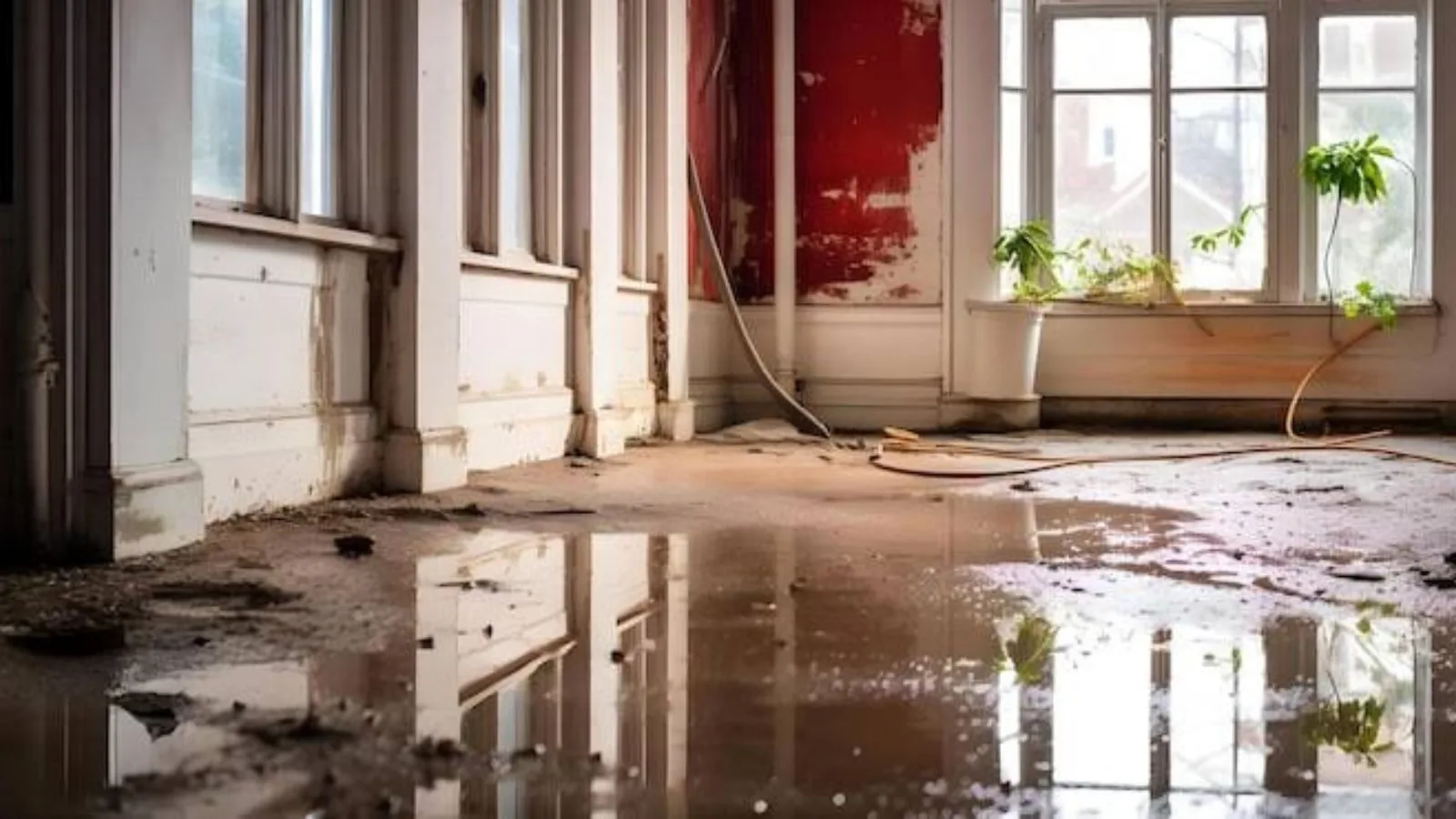
A job you can do yourself
You can probably handle a small amount of clean water on a hard floor, found within a few hours. A glass of water on tile or a small puddle from a sink supply line is a good example. Mop it, dry the area and run a fan.
The key words are small, clean and quick. If any of those are missing, the job grows beyond what towels and a fan can handle.
Steps for a small clean spill
Work in this order.
Stop the source
Close the valve or fix the drip, and make sure the water is not coming back.
Remove the water
Mop, squeegee or use a wet-dry vacuum to pull up as much as you can.
Open the area to air
Run a fan across the floor and a dehumidifier if you own one.
Check again the next day
Press on the wall base and the floor, and look for stains, soft spots or odor.
When to stop and call
These signs mean more water than you can see.
- The water is deeper than a thin film or covers more than one room.
- It came from a drain, toilet or outside, which makes it contaminated.
- It reached outlets, a panel or an appliance cord.
- It soaked carpet, pad, drywall or insulation.
- It has been there longer than a day or two.
Not sure it is a small spill?
Describe it to the dispatcher on the 24/7 line and get a straight answer.
Why surface dry is not dry
Drywall, pad, wood and insulation hold water inside. A floor can feel dry while the subfloor beneath stays wet. A wall can look fine while its bottom plate is damp. That water supports mold, and EPA guidance says to dry wet materials within 24 to 48 hours.
A moisture meter shows what your hand cannot. A basic pin meter costs less than a night in a hotel and tells you when a small area is truly dry. For a bigger area, the structural drying page explains professional methods.
What homeowners can and cannot handle
A rough guide.
| Situation | Reasonable to do alone? |
|---|---|
| Small clean spill on tile or vinyl | Yes, if dried within hours. |
| Wet area rug on a hard floor | Yes. Lift it, dry the floor and hang the rug. |
| Wet wall-to-wall carpet | No. The pad holds water, so call a crew. See the carpet page. |
| Water in a wall or ceiling | No. Cavities need opening and drying. |
| Anything from a drain or sewer | No. Keep out and call. |
| Any water near live electrical | No. Shut power off safely and call. |
A local note on timing
Humid summers in the Baltimore area slow drying, so a fan alone often falls short in July and August. In Rockdale and the older streets nearby, plaster walls and original wood floors dry slowly, so give them extra care. If a spill is near wood flooring, the hardwood page explains why waiting is costly.
In finished lower levels around Hebbville, a fan alone rarely reaches water that wicked into wall bases, so check with a meter.
Tools worth owning
A few inexpensive tools make small jobs easier. A wet-dry vacuum lifts water from hard floors and small areas. A squeegee moves water on tile toward a drain. A pin-type moisture meter shows when drywall and wood are back to normal. A box fan and a household dehumidifier handle small spills.
Keep them together with a flashlight, rubber gloves and a few towels. If a larger event happens, those same tools help you protect the house while you wait for a crew. They do not replace professional equipment on a big loss.
A worked example: a dishwasher leak on a vinyl floor
Say a dishwasher door gasket leaks and a thin sheet of water spreads across a vinyl kitchen floor. You catch it within an hour. Unplug the dishwasher, wipe up the water, pull the dishwasher forward and look under it for a pool. Dry the floor and run a fan for a day.
Next morning, press along the cabinet base and check the floor near the seams. If the cabinet toe kick feels soft or the vinyl lifts at a seam, water got under. At that point the job is bigger than a fan. The kitchen page explains what a crew does about water under cabinets.
What not to do
Do not use a heat gun or a hair dryer on wood floors, because rapid drying can split boards. Do not paint or seal a wall that still feels cool. Do not cover wet carpet with plastic. Do not run a household vacuum on wet floors, because it is not made for water and can shock you.
If you are unsure, call and describe what you see. A short call can tell you whether a fan will do or a crew is needed.
Questions About This Topic
How long should I run a fan?
Until the area and the materials under it read dry on a moisture meter, which is often more than a day. Check by feel and by meter.
Can I use a wet-dry vacuum on carpet?
For a small amount of clean water, yes. For a full room, pad removal and professional extraction work better.
Is a dehumidifier enough?
A household unit helps with a small spill. For a larger loss, commercial dehumidifiers and air movers are needed.
How do I know if mold is starting?
A musty smell, dark spots or a stain that returns are signs. Call a crew if you see them.
Does DIY drying affect my claim?
Reasonable steps to limit damage are expected. Keep photos and receipts, and tell your insurer what you did.