
Why dry to the touch is not dry
Building materials hold water inside them. Drywall can feel fine while the paper and gypsum core stay damp, and a wall cavity can hold wet insulation against the studs for weeks. That hidden moisture is the main source of mold and odor after a water loss.
EPA guidance advises drying wet materials within 24 to 48 hours to prevent mold. Doing that takes more than a few fans, because the air has to be managed as well as moved.
ANSI/IICRC S500 describes structural drying as a managed process with a dry standard and monitoring, and this is the method the crew follows.
The equipment and what each does
Each tool handles a different part of the job.
Air movers
High-velocity fans push air across wet surfaces to lift moisture into the air. They are placed along walls and floors by pattern.
Dehumidifiers
These pull moisture out of the air so the drying cycle keeps going. Without them, the water just moves to another place.
Moisture meters
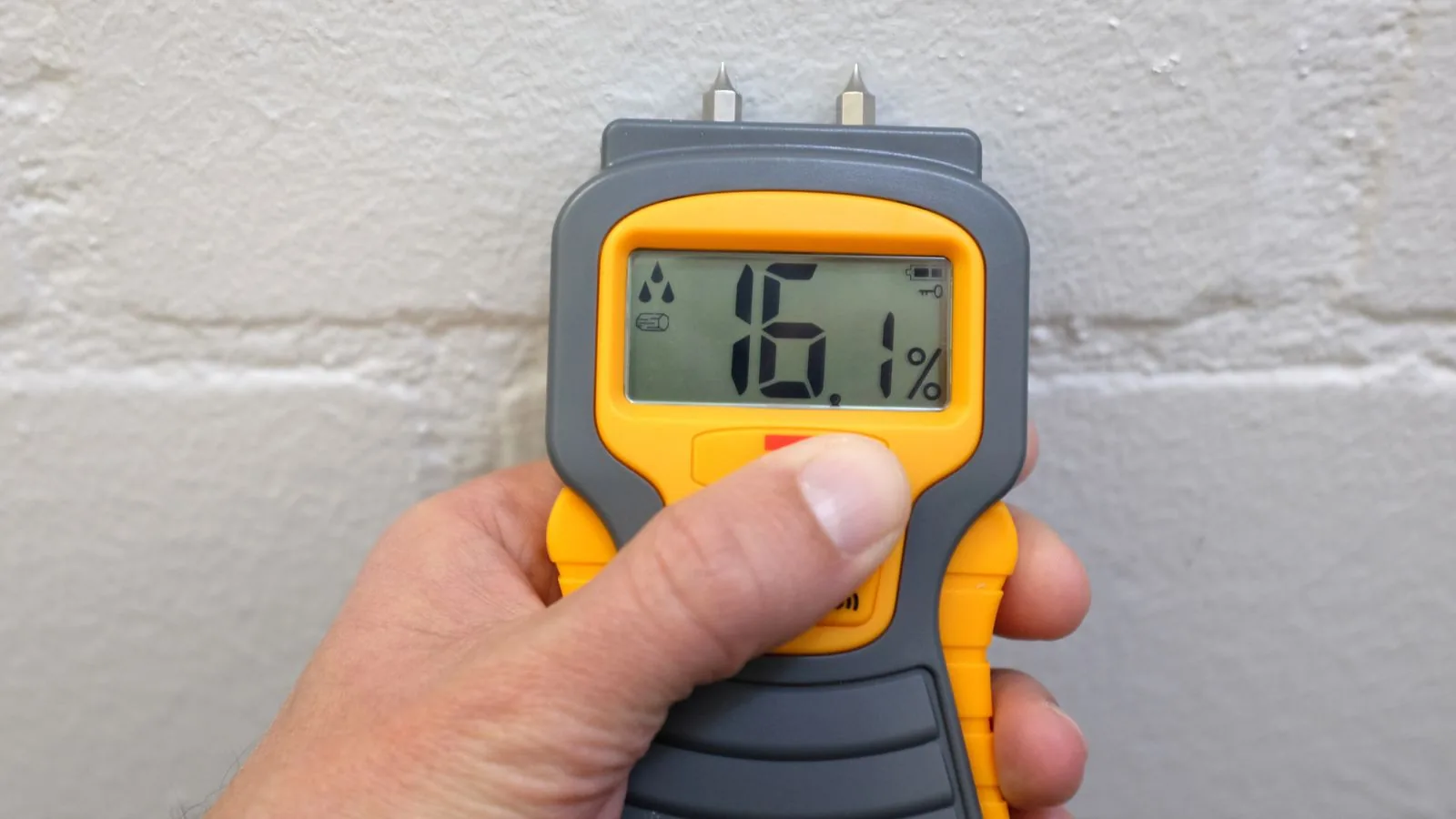
Meters read the water content in wood, drywall and concrete, so you know when materials are in a normal range.
Thermal cameras
A thermal camera shows cool, wet areas behind walls and under floors and helps place the equipment.
How a drying job is managed
Drying follows a plan with checks every day.
Map the loss
Meters and a thermal camera mark every wet area and set a dry reference reading from an unaffected room.
Set the equipment
Air movers and dehumidifiers are placed according to the room volume and the wet surfaces.
Check daily
Readings are taken each visit, and equipment is moved or removed as areas reach target.
Confirm dry
The job is done when readings match the dry reference, not when the calendar says so.
Water gone but walls still damp?
Call the 24/7 line and ask for a moisture check.
How long drying usually takes
Most residential drying runs a few days, with a longer stretch for thick materials like hardwood, plaster or concrete. Weather affects it too. Humid summer air in the Baltimore area slows evaporation, so dehumidifiers matter more in July than in January.
The equipment is noisy and uses power, and it can raise your electric bill for a few days. That is normal, and a crew can explain how many units are running and why.
What helps drying go faster
You can help the process.
- Keep doors and windows closed during drying, unless the crew says otherwise.
- Do not turn off the equipment, even though it is loud.
- Move furniture off wet floors and out of the way of the air movers.
- Let the crew take readings each day and keep a record of them.
Some materials cannot be dried and are removed. Soaked insulation, saturated drywall and padding are the usual ones, as described on the flood damage page and the wall and drywall page.
What changes the cost of structural drying
Drying is priced by equipment and days.
| Cost factor | How it changes the job |
|---|---|
| Affected square footage | More wet area needs more air movers and dehumidifiers. |
| Materials | Hardwood, plaster and concrete take longer than drywall and carpet. |
| Water category | Contaminated water adds cleaning and removal before drying. |
| Humidity and weather | Humid air slows the process. |
| Number of days | Drying ends when readings reach target, so the days are not fixed in advance. |
Want your real number? Call the 24/7 line and describe the rooms that are wet.
Drying jobs around Windsor Mill
Most drying calls follow a pipe break, an appliance leak or a storm, and many are in two-story houses and townhomes where water ran down through the floor below. The same line covers Woodlawn, Randallstown, Pikesville, Owings Mill, Catonsville and Ellicott City.
If the water source is still unknown, the crew can follow the moisture readings back toward it, and then a plumber or roofer can fix it. For the first step in a flooded room, see water extraction.
Structural Drying Questions
Do you offer structural drying emergencies at night or on weekends in Windsor Mill?
Yes. The line is answered 24/7. Starting drying within a day or two of the loss makes a big difference.
How do you know when a building is dry?
By moisture readings compared with a dry reference in the same building. Dry to the touch is not enough.
Why do I need so many fans and dehumidifiers?
Fans move air across wet surfaces and dehumidifiers remove the moisture from the air. Both are needed for the water to leave the building.
Can I run my own fans instead?
Household fans help with a small spill, but they do not manage humidity or reach wet cavities. Larger losses need professional equipment.
Will drying raise my power bill?
Yes, for a few days. The crew can tell you how many units are running.