
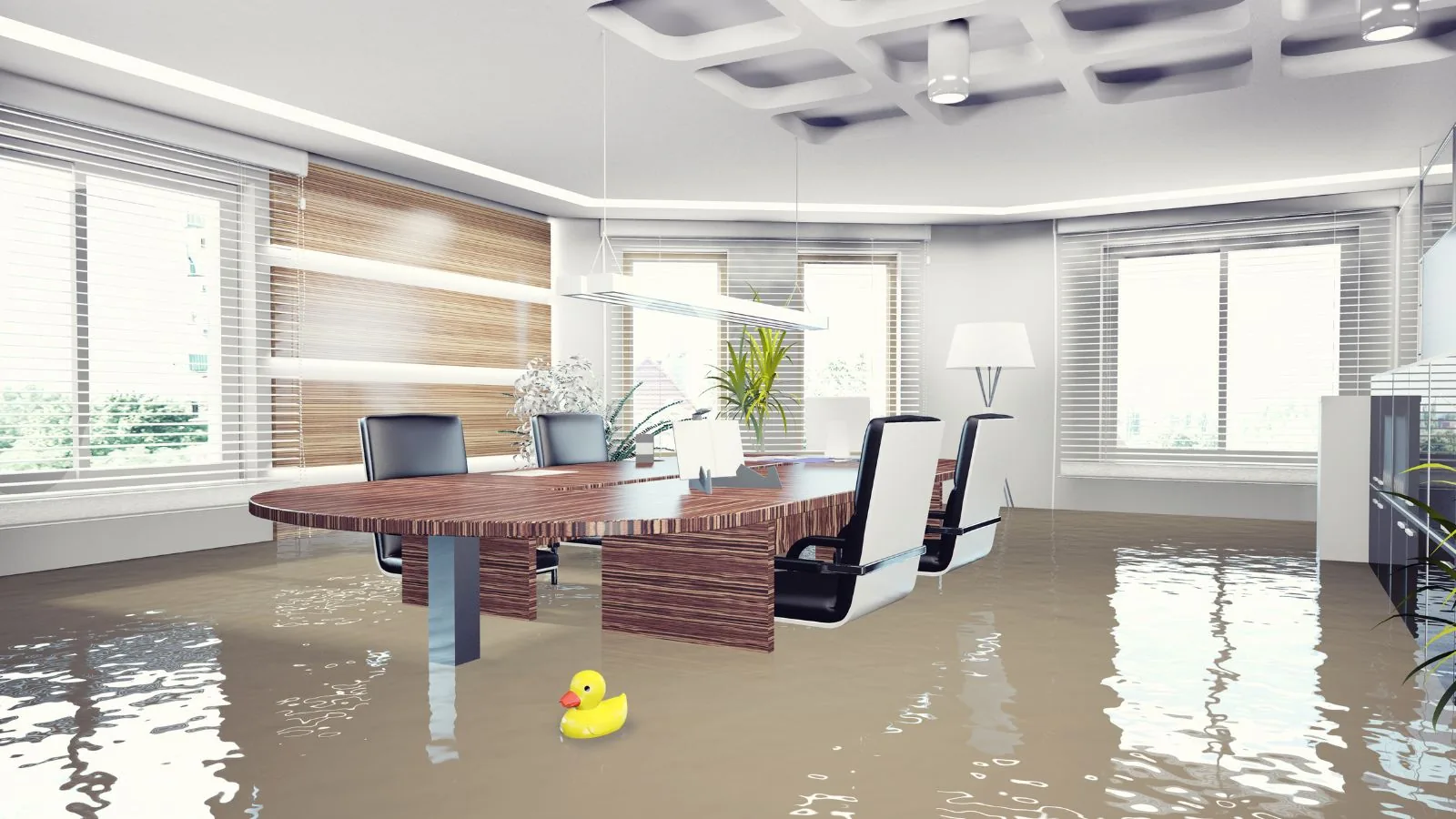
Why a commercial water emergency is handled differently
A business cannot wait a week for a fix. Water in a retail bay, a medical suite or a strip-center unit touches inventory, equipment, ceiling grids and shared walls, and every day closed costs money. The first questions are how much of the space can stay open and which rooms must be cleared.
Commercial buildings also share systems. A failed sprinkler line, a roof drain or an upstairs tenant's burst pipe can send water into several units at once, which raises questions about who is responsible and what each insurer needs to see.
Commercial jobs follow the same ANSI/IICRC S500 water categories as homes, with extra attention to containment and written records.
Common commercial water sources
Sources differ from a home, and so does the cleanup plan.
Roof drains and flat-roof leaks
A clogged drain or a failed membrane drops water through ceiling tile and insulation into the room below.
Supply and sprinkler lines
A pressurized line can release a large volume in minutes and affect several floors or units.
Restroom and kitchen fixtures
Overflowing toilets and failed supply lines are frequent in shared buildings.
Storm intrusion
Wind-driven rain through storefront doors, loading docks and rooftop units.
How a commercial job is organized
The scope is written down early so owners and tenants know what happens next.
Make safe
Water is stopped, power is checked and hazards are marked.
Extract and protect
Standing water is pulled out and contents are lifted or moved.
Dry the structure
Air movers and dehumidifiers are placed after moisture mapping, which matters in large open spaces.
Document everything
Photos, readings and an itemized scope support a claim with a landlord or insurer.
Water loss at your business?
Call the 24/7 line and describe the building, the source and the rooms affected.
Downtime, tenants and documentation
Ask whether the space can reopen in phases. A clean, dry front counter may be able to open while a back storage room finishes drying. The crew can set up barriers and containment so the dry side stays usable.
Keep a simple record of what was wet, when it was found and what was moved. Photos with dates, moisture readings and written scopes help when a landlord, a property manager and several tenants all need to understand a loss. Whether a policy pays for business interruption depends on the policy, so ask your insurer or broker.
What to gather before the crew arrives
A few facts speed up the first visit.
- The address, the floor and the unit or suite number.
- Where the main water shut-off is and whether it has been closed.
- Whether the building has a property manager who must approve access.
- Which rooms hold inventory, servers, files or equipment that need to be moved first.
What changes the cost of a commercial job
Commercial pricing is written after a walk-through.
| Cost factor | How it changes the job |
|---|---|
| Square footage affected | Large open floors need more equipment and more drying time. |
| Building materials | Ceiling tile, carpet tile, drywall and concrete each dry differently. |
| Water category | Sprinkler and supply water start clean, while drain and sewer water do not. |
| Access and hours | After-hours work and occupied buildings need scheduling and containment. |
| Contents | Inventory and equipment may need to be moved, covered or dried separately. |
Insurance wording varies a lot between commercial policies, so ask your broker what applies. Want your real number? Call the 24/7 line.
Commercial calls around Windsor Mill
Properties along Liberty Road, Security Boulevard and the Rutherford Business Park area in Windsor Mill carry mixes of offices, retail and light industrial space. A leak from one tenant's unit often reaches the neighbor, so the first call is often from a property manager instead of the occupant.
The same line serves business owners in Milford Mill, Woodlawn, Randallstown, Pikesville, Owings Mills and Ellicott City. For a house or apartment with the same cause, the burst pipe page covers the residential side.
Commercial Water Damage Questions
Do you handle commercial water damage emergencies at night or on weekends in Windsor Mill?
Yes. The line is answered 24/7, and many commercial losses are found after closing.
Can part of the building stay open during cleanup?
Sometimes. Barriers and phased work can keep a dry area in use, but safety and air quality come first.
Do you work in apartment buildings with several units?
Yes. Multi-unit losses need coordination between the property manager and each affected unit, and written scopes help with that.
What records should a property manager keep?
Dated photos, the source of the water, moisture readings and the written scope of work. Those help every party involved.
Is a commercial job priced the same as a house?
No. Size, materials, access hours and contents change the plan, so pricing is written after a walk-through.