
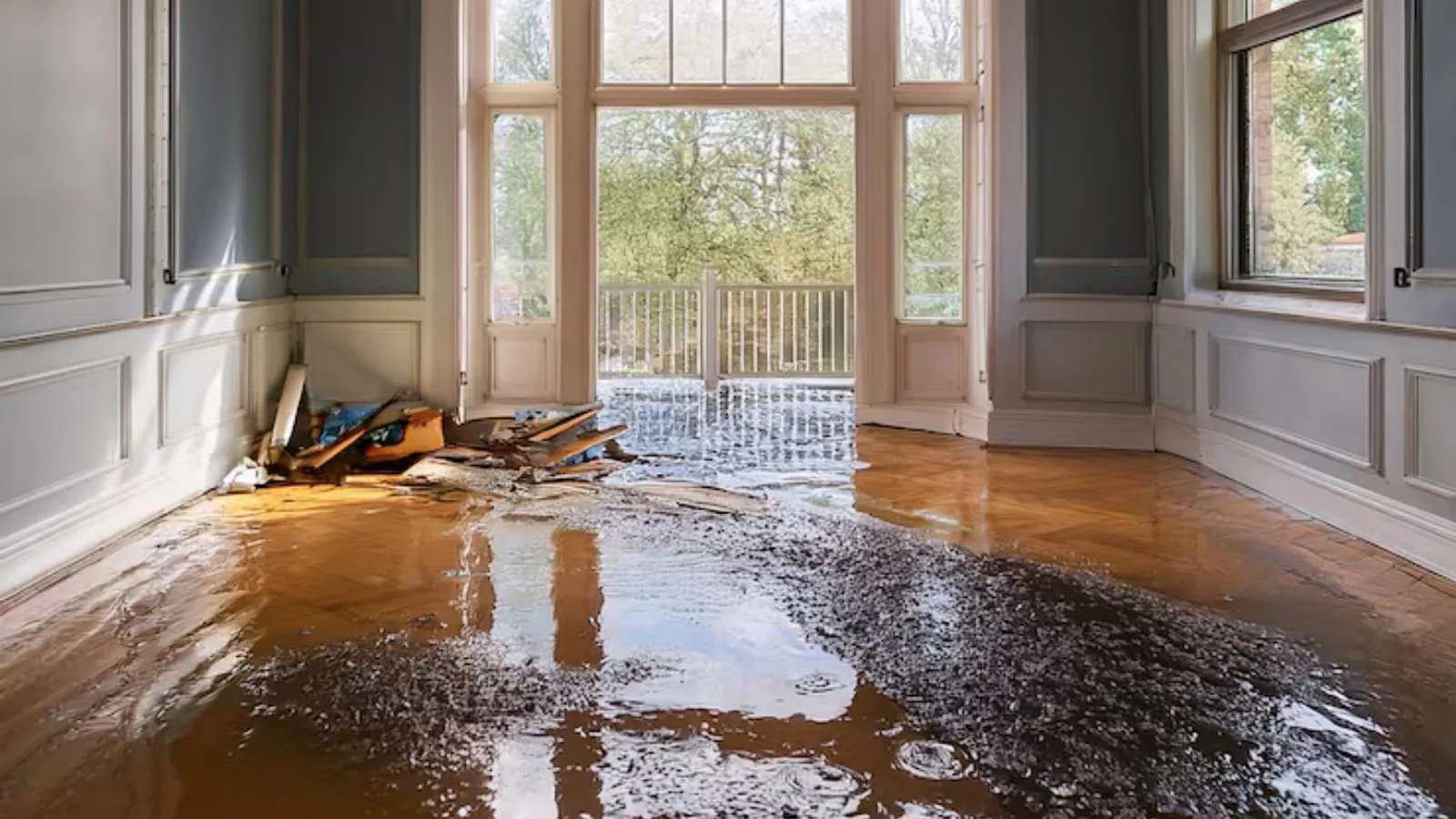
What happens inside a wet wall
Drywall is gypsum between sheets of paper, and both soak up water. Behind it sit studs, a bottom plate and often insulation, and water settles low in the cavity and wicks upward. A wall that was wet for a day may need only drying, while one that was wet for a week may need part of the board cut out.
Paint hides a lot. A wall can look normal while the paper facing is already growing mold on the back side. Moisture meters and a thermal camera show what a flashlight cannot.
ANSI/IICRC S500 guides when wet drywall can be dried in place and when it must be cut out, and readings from a dry reference wall settle the question.
Signs water is in the wall
Look and feel before you paint.
Bubbling or peeling paint
Moisture pushes the paint off the board. Touch it, and if it is soft or cool, water is present.
Soft or crumbling baseboard area
Drywall at the bottom of a wall softens first and may crumble when pressed.
Stains that return
A stain that comes back after painting means the source is still active.
Musty smell
A smell with no visible source often comes from a wet cavity.
How a wall gets repaired
Dry first, then rebuild.
Find the source and the edges
A moisture map shows where the water is and how high it climbed.
Open the wall
A flood cut removes the wet lower section, often a foot or two above the water line.
Dry the cavity
Air movers push air through the opening, and dehumidifiers pull moisture from the room.
Hand off to repair
When readings are normal, a drywall contractor hangs, tapes, textures and paints.
Wall wet or stained?
Call the 24/7 line and describe the stain and where it is. A moisture check shows how far it goes.
When a flood cut is needed
A flood cut is a straight cut across the wall, usually 12 to 24 inches above the waterline, that removes the wet section and exposes the cavity. It is used when the water was contaminated, when insulation is soaked or when the board has been wet too long to dry safely in place.
Clean water caught quickly sometimes allows drying through small holes, with no cut at all. A crew decides by meter readings and not by guess, and the decision is yours to approve after seeing the numbers.
What to do while you wait
Small steps help.
- Move furniture away from the wall and remove anything hanging on it.
- Do not paint over a damp wall, because paint traps moisture and the stain returns.
- Take photos of the stain with a date, and note whether it grows.
- Turn off power to outlets in a wet wall if you can reach the breaker safely.
A wall that is wet because of a plumbing leak needs the leak fixed by a plumber. A wall that is wet because of the roof or a window needs a roofer or window contractor. See also ceiling water damage when the stain started above.
What changes the cost of wall repair
Cost follows how much board has to come out.
| Cost factor | How it changes the job |
|---|---|
| Height of the water line | A higher wick line means a taller cut. |
| Number of walls | More walls mean more removal and more drying equipment. |
| Insulation and framing | Wet insulation is replaced, and framing is dried or treated. |
| Water category | Contaminated water means removal instead of drying. |
| Finish work | Texture, paint and trim are priced as repair work. |
Want your real number? Call the 24/7 line and describe the wall and what you see.
Wall damage calls in Windsor Mill
Many calls come from bathrooms and laundry rooms where a supply line or tub drain leaked into the wall behind, and from exterior walls where rain got in around a window. Houses in Rockdale and Milford Mill with plaster walls have their own concerns, because plaster dries slowly.
The same line serves Woodlawn, Randallstown, Pikesville, Catonsville and Ellicott City. For a full-room job after a pipe break, see the burst pipe page.
Wall and Drywall Water Damage Questions
Do you offer wall water damage repair at night or on weekends in Windsor Mill?
The dispatch line is answered 24/7, and an urgent wall leak can be scheduled quickly. Repair work like painting is done in regular hours by other trades.
Can I just cut a hole and let it dry?
A small hole helps, but air movers and a dehumidifier are needed to pull water out of the cavity. A moisture check shows whether it is enough.
Does mold grow behind painted drywall?
It can. Moisture trapped behind paint supports mold on the back of the board within days.
Do you paint and finish drywall?
No. Drywall hanging, taping and painting are separate trades after the wall is dry.
How high does water travel up a wall?
Drywall wicks water upward, often one to two feet above the visible waterline, so meters decide the cut.