
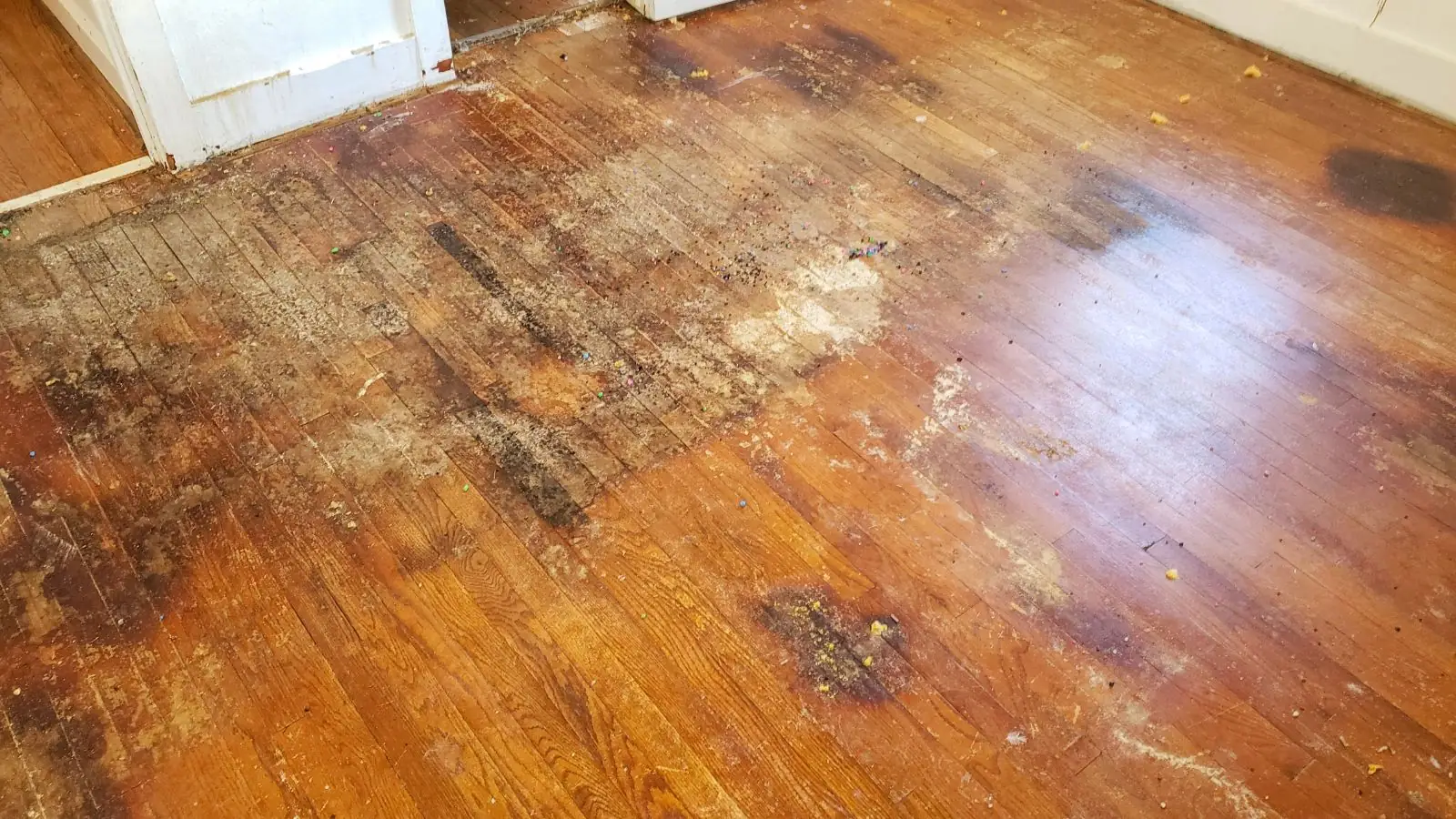
What water does to a wood floor
Solid hardwood is a natural material that takes on and gives off moisture with the seasons. A sudden soaking is a different matter. Boards swell across their width, edges lift and the floor can cup, which means the edges rise higher than the center. Left wet, the boards can buckle off the subfloor and mold can grow in the gap beneath.
Engineered flooring is built from layers, and the glue between layers can fail when it stays wet. Laminate has a fiberboard core that swells and does not return. Each type responds differently, so the first step is to know what is under your feet.
Drying wood floors follows ANSI/IICRC S500 principles of measured moisture content, so readings, not appearance, say when a floor is ready for finishing.
Signs the floor is taking on water
Look for these before they get worse.
Cupping
The board edges are higher than the center, which means the underside is wetter than the top.
Crowning
The center rises above the edges. This often shows up after a cupped floor is sanded while still wet.
Gaps or buckling
Boards pull apart as they dry, or lift off the subfloor when the swelling pushes them.
Dark staining
Dark marks between boards point to long-term moisture or mold.
How a wet hardwood floor is dried
Speed and patience both matter.
Find the water
Moisture meters check the boards and the subfloor, and a thermal camera maps the wet area.
Remove surface water
Water is extracted from the floor and any rugs or pads are lifted.
Dry with air movers
Fans and dehumidifiers pull moisture from the wood. Some jobs use mats that dry through the floor surface.
Track readings
Readings are logged until boards return to their normal range, and drying is paused or extended as needed.
Hardwood soaked?
Call the 24/7 line and describe how long the floor has been wet and what the boards look like.
Can it be saved or does it need to be replaced?
Many floors dry back to flat when water is removed quickly, and some cup a little and settle after drying. Floors that sat in water for days, that buckled off the subfloor or that show mold usually need replacing in the wet area.
Sanding and refinishing should wait until boards are dry and stable. Sanding a floor that is still holding moisture can lock in cupping or create crowning. The crew can tell you when readings are in range, and a flooring contractor then judges the finish work.
What you can do before the crew arrives
Small steps help the wood.
- Wipe up standing water and lift rugs, mats and furniture legs off the floor.
- Run the air conditioner or a dehumidifier, and open windows only if outside air is dry.
- Do not use heat guns, hair dryers or a high-heat setting. Rapid drying can split boards.
- Do not seal or cover wet wood with plastic, wax or a new coat of finish.
Water under a floor often comes from a pipe, a dishwasher or a slab. The appliance leak page and the slab leak page cover two common sources.
What changes the cost of hardwood floor work
The range is wide because floors differ so much.
| Cost factor | How it changes the job |
|---|---|
| Floor type | Solid, engineered and laminate dry and fail differently. |
| Size of the wet area | A single board run costs less than a whole room. |
| How long it was wet | Fresh water gives a better outcome than water that has been there for days. |
| Subfloor moisture | A wet subfloor adds drying days before any finish work. |
| Finish work | Refinishing or replacing boards is a flooring contractor's job and priced separately. |
Insurers judge flooring losses by cause and by what the policy says. Want your real number? Call the 24/7 line.
Hardwood in Windsor Mill homes
Many homes in Milford Mill and Rockdale have original oak floors from the mid century, and newer townhomes near Rolling Road often have engineered planks over a slab. Calls come from those homes and from Woodlawn, Randallstown, Pikesville and Catonsville.
Maryland's home improvement commission has a license search for contractors. Use it to check a flooring or remodeling contractor before hiring one for the replacement work.
Hardwood Floor Water Damage Questions
Do you handle hardwood water emergencies at night or on weekends in Windsor Mill?
Yes. The line is answered 24/7. Wood moves fast when wet, so earlier calls help.
How long before hardwood is damaged?
Cupping can start within a day or two, and mold becomes a risk when wood stays wet beyond a couple of days. EPA guidance recommends drying within 24 to 48 hours.
Can cupped hardwood go back to flat?
Often yes, if the floor dries slowly and evenly. Wait until readings are normal before sanding.
Do you sand and refinish floors?
No. This service dries the floor and removes material that cannot be saved. A flooring contractor handles sanding, refinishing and board replacement.
Is engineered flooring different?
Yes. Its layers can separate when wet, so it is less forgiving than solid wood in some cases and more stable in others. A moisture check tells the story.