
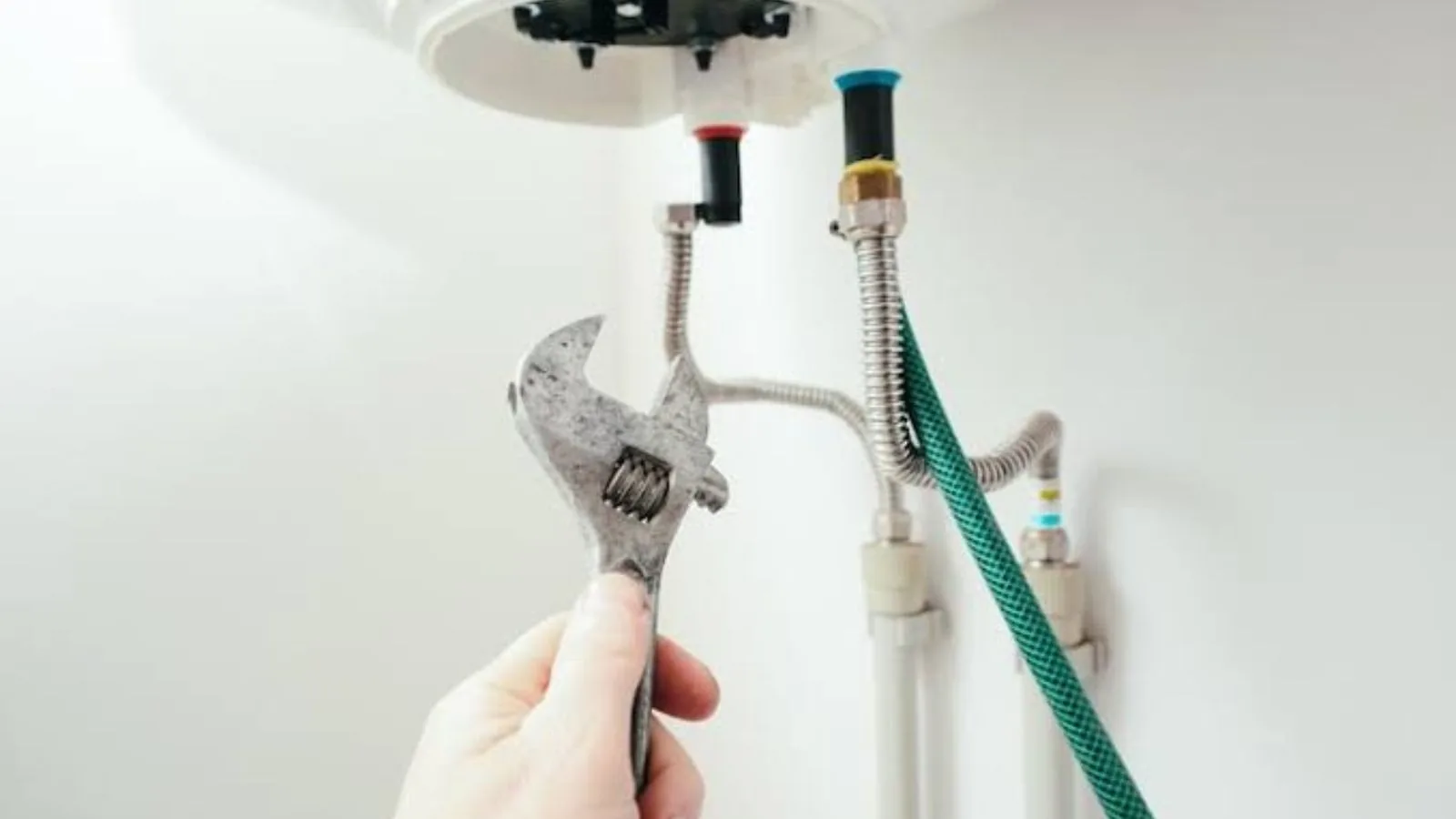
When a failed water heater becomes an emergency
A tank lasts around ten years, and the failure is often a small seep that turns into a flood. Sediment and corrosion eat through the steel, and a failed relief valve or a loose connection can also leak. A tank that suddenly empties floods a utility room or a basement fast.
Hot water adds scald risk. Do not touch hot water, and wait for the heater to cool before moving it. If the heater is gas, do not light anything if you smell gas, and leave the house and call the utility.
Water from a tank failure begins as clean supply water under ANSI/IICRC S500, and drying starts as soon as the standing water is out.
First steps
Cut the supply before cleanup begins.
- Turn off the electric breaker or set the gas valve to off before you step near the heater.
- Close the cold water supply valve on the pipe above the tank.
- Keep away from standing water if outlets, cords or a panel are near it.
- Leave the house and call the gas utility if you smell gas.
How the cleanup runs
Water comes out first, and then the structure dries.
Extract
Pumps and wet vacuums clear the floor of the utility room or basement.
Check the materials
Drywall, insulation, flooring and stored items are checked with meters.
Remove what cannot be saved
Saturated drywall, carpet and cardboard are removed.
Dry
Air movers and dehumidifiers dry the room and adjacent areas.
Water heater leaking?
Shut off power and water, then call the 24/7 line.
Water heater in a basement or closet
A heater in an unfinished basement drains to a floor drain if one exists, and the damage may be limited. A heater in a closet or a finished basement can soak flooring, walls and the stuff stored nearby, and the water can run under walls into the next room.
Look for a drain pan under the tank. A pan with a drain line catches small leaks, but a full tank failure overflows it. A leak sensor near the heater gives you an early warning.
Replacement and the cleanup
The tank and the cleanup are two jobs.
- A licensed plumber replaces the heater and any damaged lines.
- The cleanup crew removes water and dries the structure.
- Keep the old tank and its tag, because the age and model help an insurer.
- Photograph the label, the leak and the wet areas before anything is moved.
Maryland's home improvement commission offers a license search for plumbers and contractors. Use it before hiring for the replacement.
What changes the cost of a water heater cleanup
The cleanup depends on where the heater sits.
| Cost factor | How it changes the job |
|---|---|
| Location | A basement with a drain costs less than a finished closet. |
| Volume of water | A full tank release floods more than a slow drip. |
| Materials near the heater | Drywall, carpet and stored items add to the scope. |
| Hours it leaked | Time determines how far water spread. |
| Heater replacement | The new heater and install are a plumber's job. |
Insurance varies by cause and policy. Want your real number? Call the 24/7 line.
Water heater calls around Windsor Mill
Many calls come from townhomes where the heater sits in a utility closet with a finished room beside it, and from older houses in Rockdale and Hebbville with the original tank in the basement. The same line serves Woodlawn, Randallstown, Pikesville and Catonsville.
If the basement flooded in the process, the basement page covers the rest of the cleanup.
Water Heater Leak Cleanup Questions
Do you handle water heater leak emergencies at night or on weekends in Windsor Mill?
Yes. The line is answered 24/7. Shut the water and power off first.
How much water can a tank release?
Common residential tanks hold 40 to 50 gallons. The supply line can keep adding water if the valve stays open.
Do you replace the water heater?
No. A plumber replaces the heater. This service removes the water and dries the area.
Is a water heater leak covered by insurance?
A sudden failure is often covered for the water damage, though the heater itself may not be. A slow leak is treated differently. Read your policy.
Is the water hot?
It can be. Do not touch it, and let the tank cool before anyone moves it.