
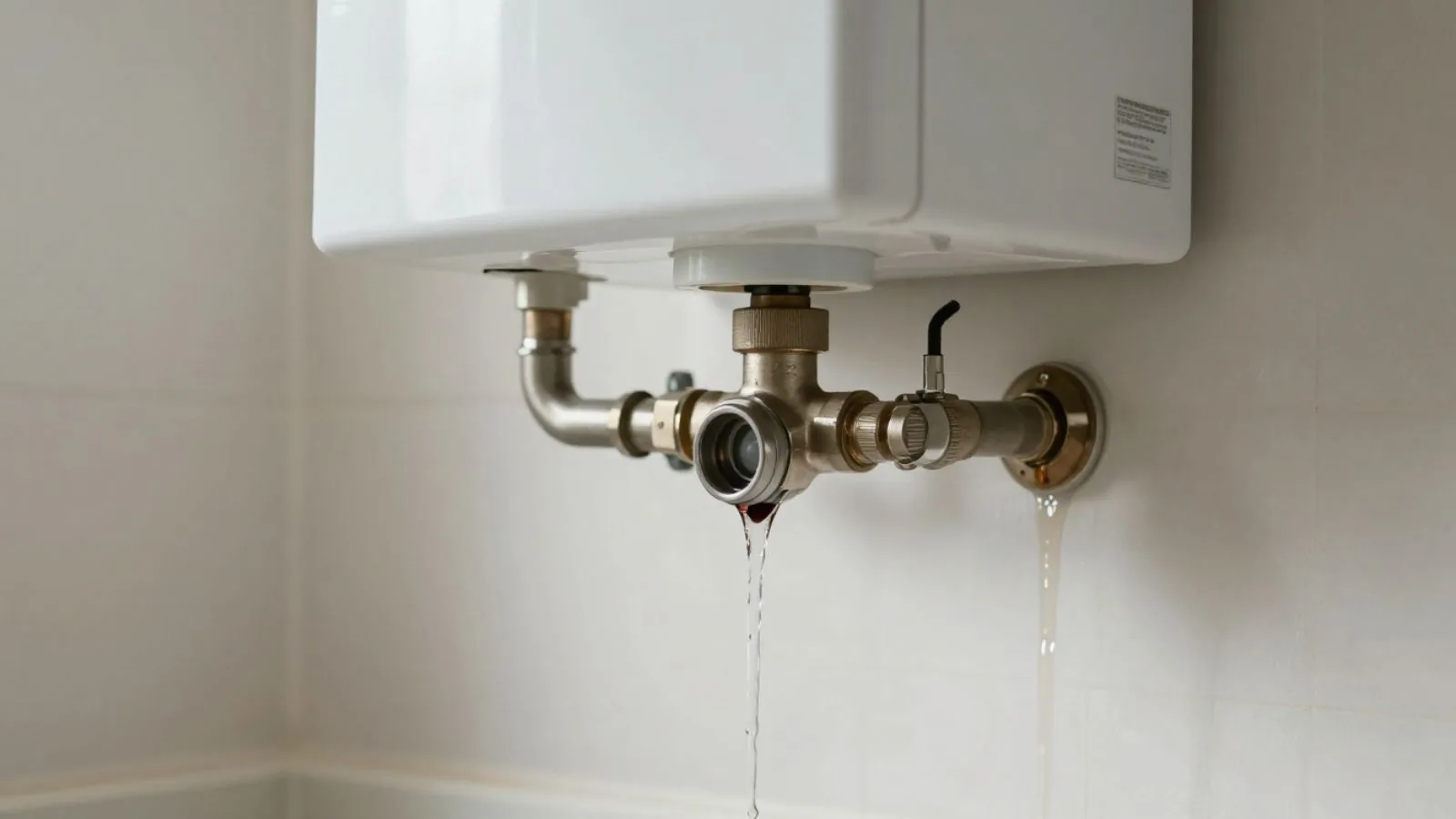
A frozen pipe emergency in a Maryland winter
Water expands about nine percent when it freezes, and that pressure splits copper, PEX and galvanized lines. The split often goes unnoticed until the ice thaws and water starts to flow. Pipes in exterior walls, unheated crawl spaces, attics, garages and under sinks on outside walls are the usual victims.
A cold snap with the heat set low, a vacant house with the furnace off or a power outage in winter all add risk. The pipe may be fine for a day and then burst on the warm day that follows.
After a thaw, ANSI/IICRC S500 guidance applies as with any supply line loss: stop the source, remove water and dry to a measured standard.
If a pipe is frozen but not broken
Act slowly and carefully.
Open the faucet
Leave it open a little so the water can flow as it thaws and relieves pressure.
Warm the pipe gently
Use a hair dryer or warm towels, working from the faucet side toward the frozen part.
Do not use open flame
A torch can set the house on fire and can damage the pipe.
Check for splits
Look along the pipe for cracks, bulges or wet spots, and close the main if you see any.
If the pipe has already burst
Stop the water first.
- Close the main shut-off valve at once.
- Open a faucet on the bottom floor to drain the lines.
- Stay clear of wet outlets and the breaker panel if water is near.
- Call the 24/7 line and a plumber, and take photos of the break and the wet areas.
Pipe frozen or split?
Close the main and call the 24/7 line.
Why the damage shows up after the thaw
The pipe splits when it freezes, but the ice plugs the split. When the temperature rises, the plug melts and water sprays. It may run inside a wall or under a floor with no one home, and the damage grows until the water is shut off.
That is why a house that looks fine during a freeze can have a flood on the first mild afternoon. Cleanup follows the same path as the burst pipe page: stop the water, extract, remove wet materials and dry the structure.
How to lower the risk next winter
Small habits help.
- Disconnect garden hoses and close the shut-off valves for outdoor spigots.
- Keep the heat on and set to 55 degrees or higher, even when away.
- Open cabinet doors under sinks on exterior walls during hard freezes.
- Insulate exposed pipes in crawl spaces, garages and attics.
For longer trips, the guide on leaving the house for a few days lists more steps.
What changes the cost of a frozen pipe cleanup
Damage depends on how long the water ran.
| Cost factor | How it changes the job |
|---|---|
| Time the pipe ran | A pipe that ran for hours reaches more rooms. |
| Location of the split | A split in a wall cavity or ceiling adds opening and drying work. |
| Floors affected | Water traveling through floors adds more rooms. |
| Materials | Carpet, drywall and insulation respond differently. |
| Pipe repair | The plumber's repair is a separate bill. |
Insurance usually looks at the burst as sudden, but read your policy. Want your real number? Call the 24/7 line.
Frozen pipe calls around Windsor Mill
Cold snaps lead to calls from Windsor Mill, Milford Mill, Woodlawn, Randallstown and Pikesville, and the biggest source is a vacant or underheated rental. Houses in Hebbville and Rockdale with plumbing in exterior walls are common.
The line also serves Catonsville and Ellicott City.
Frozen Pipe Water Damage Questions
Do you handle frozen pipe emergencies at night or on weekends in Windsor Mill?
Yes. The 24/7 line is answered at all hours, and winter pipe breaks often show up on weekends.
Should I thaw the pipe myself?
If it has not burst, you can warm it gently with a hair dryer. Never use an open flame.
Will the pipe burst when it thaws?
It may. The split can be sealed by ice and reveal itself when the ice melts.
Does insurance cover a frozen pipe burst?
A sudden burst is often covered, but a vacant house or lack of heat can change that. Read your policy.
Do you repair the pipe?
No. A plumber repairs it. This service handles water, drying and removal.