
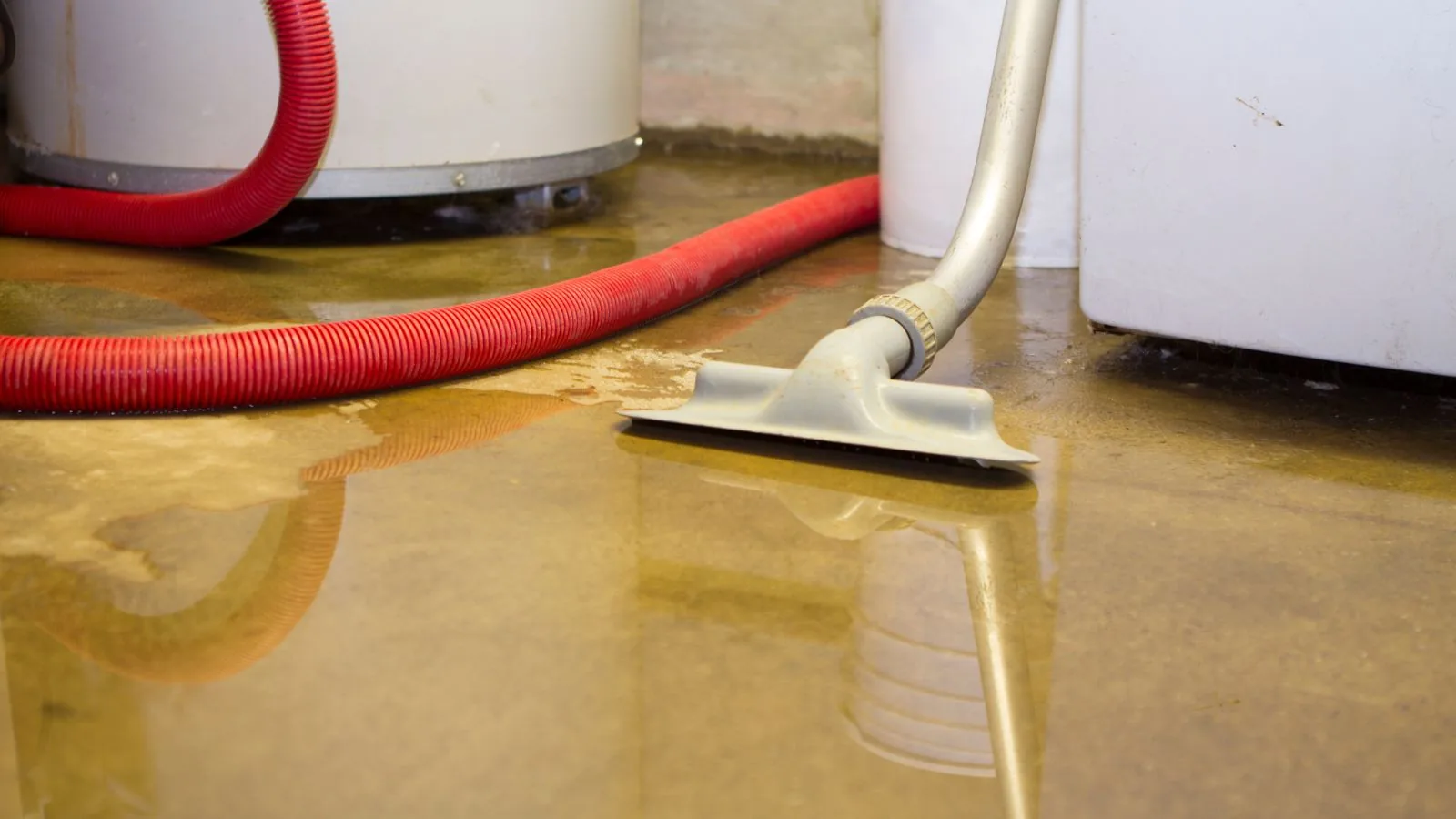
A flooded basement is an emergency first, a plumbing question second
Basements get wet from four main causes. A pipe or water heater fails inside the house, a sump pump quits during heavy rain, groundwater seeps through the wall or floor, or a sewer line backs up through the floor drain. Each cause changes the water category and what can be saved.
The first hours decide how far it spreads. Carpet, pad, stored cardboard and drywall near the floor wick water upward and hold it. A basement with a finished ceiling below a kitchen or bath can also take water from above, which hides a second source.
Under ANSI/IICRC S500, groundwater and drain water in a basement are handled as contaminated, so the crew cleans and removes before it dries.
Common basement causes in this area
Which one you have decides the next call.
Sump pump failure
A pump that stops, loses power or is overwhelmed lets groundwater rise. Cleanup deals with the water already inside, and replacing the pump is a plumber's job.
Seepage after rain
Water pushes through a wall crack or the floor joint. Baltimore County describes basement seepage as a private property problem.
Supply line or water heater failure
A burst line or a tank leak puts clean water on the floor fast and can flood the room within an hour.
Drain or sewer backup
Water rising from a floor drain is contaminated. Read the sewage backup page before touching it.
Finished basements need more care
A finished basement has drywall, carpet over a slab, framed walls and often a drop ceiling. Water gets behind baseboards and into the bottom plate of the wall, where it can stay wet for weeks. Moisture meters and a thermal camera locate that water, and the crew then decides whether the lower few feet of drywall must be cut out.
Insulation inside a wet wall cavity holds water like a sponge. In most cases it is removed, the cavity is dried and the wall is closed only after readings match dry areas. The structural drying page describes that process.
Basement taking on water?
Describe how deep the water is and where it enters. The phone line is open 24/7.
How basement cleanup runs
A fixed order keeps a cleanup from sealing damp materials inside the walls.
Pump out
Submersible pumps clear standing water, then extractors take the film off the slab.
Remove soaked materials
Wet carpet, pad, insulation and low drywall are cut out and removed.
Clean the space
Slab, framing and anything salvageable are cleaned and treated.
Dry and check
Air movers and dehumidifiers run until the readings match a dry reference.
What to do while you wait
These steps protect people and belongings.
- Keep everyone out of the water until power is confirmed off.
- Carry boxes and furniture upstairs if the stairs are dry and safe.
- Take photos of the waterline and any damaged items before moving them.
- Check whether the water is clear, cloudy or smells like sewage, and tell the dispatcher.
Restoration is not waterproofing. Cleanup removes water and damage that has already happened. Sealing foundation cracks, grading the yard or replacing a sump pump is separate work, and an inspector or plumber is the right call for it.
What changes the cost of basement cleanup
The price follows the water, the finish level and the drying time.
| Cost factor | How it changes the job |
|---|---|
| Water category | Groundwater and drain water are contaminated, which adds removal and cleaning steps. |
| Finished or unfinished | Drywall, carpet and framing add removal and drying work. |
| Square footage | A full basement needs more pumping and equipment than one room. |
| Contents | Stored items may need to be moved out before work can reach the floor. |
| Rebuild scope | Replacing wall board, trim and flooring is a separate phase. |
Coverage depends on the cause and your policy. Maryland's insurance regulator says seepage is a maintenance issue and backup needs an endorsement, so ask your insurer. Want your real number? Call the line.
Basements around Windsor Mill and nearby towns
Calls come from split-level and lower-level homes along Rolling Road, from townhomes near Windsor Boulevard and from older blocks in Hebbville and Milford Mill. We also take basement calls from Woodlawn, Randallstown, Catonsville and Ellicott City.
For a sewer backup that comes from the county main, Baltimore County lists 410-887-7415 for basement flooding from sewage backups, with 410-887-5210 for after-hours emergencies. Call the county line for the main, and call here for the cleanup inside the house.
Basement Water Damage Questions
Do you handle basement flooding emergencies at night or on weekends in Windsor Mill?
Yes. The line is answered 24/7, and heavy rain often causes basement calls after dark.
Can you tell me why my basement keeps flooding?
Cleanup crews can point out where water entered and what is wet, but finding and fixing the cause belongs to a plumber, a foundation specialist or a drainage contractor.
Do you do waterproofing or foundation repair?
No. Restoration removes water and damaged materials and dries the structure. Waterproofing is a different trade.
Does insurance cover a flooded basement?
It depends on the cause. A burst pipe is generally covered, seepage generally is not, and sewer or sump backup needs an endorsement. Check your policy.
How long does a basement take to dry?
Often several days of equipment, with daily readings. Thick concrete and wet insulation hold moisture longer than drywall alone.