
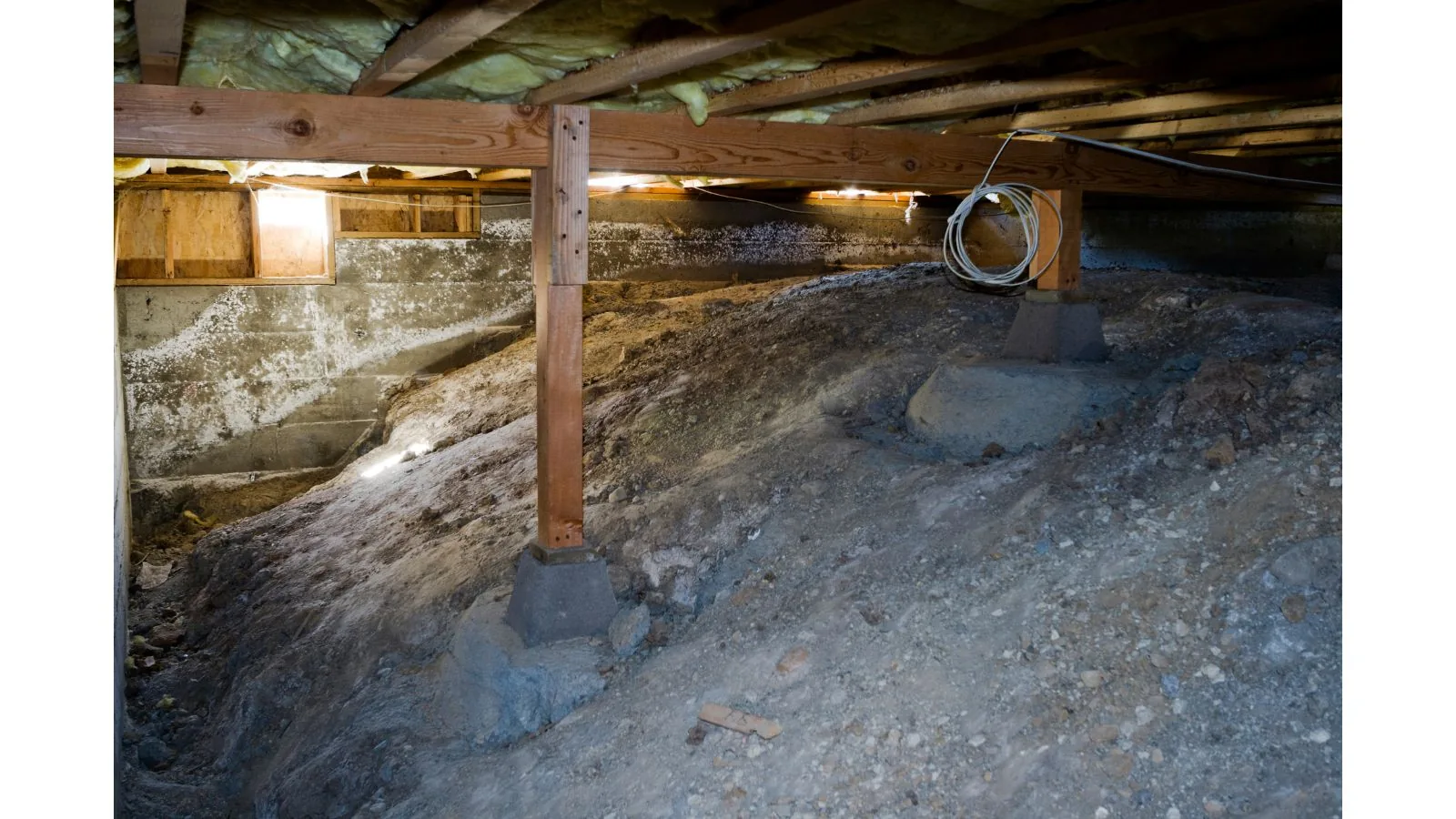
Why a wet crawl space matters
A crawl space sits directly under the living area, so moisture there rises into the floor system. Wet joists and subfloor can soften, insulation falls out of place and mold can grow on wood that stays damp. The smell often reaches the rooms above through gaps around ducts and pipes.
Many crawl spaces have a dirt floor with a plastic vapor barrier. When that barrier is torn or missing, ground moisture evaporates upward all year, and a rain event can put standing water under the house.
Drying wood framing in a crawl space follows the ANSI/IICRC S500 approach of measured moisture content against a dry reference.
What wets a crawl space
Cause and cleanup go together.
Heavy rain and poor grading
Water runs toward the foundation and enters through vents or low spots.
Plumbing leaks
A drain or supply line under the house can drip for months and nobody sees it.
High groundwater
After long rain, the water table rises and water seeps into the space.
HVAC condensation
Ducts and units in a crawl space sweat and drip onto the floor.
How a crawl space is cleaned and dried
The work is done in tight quarters.
Pump out standing water
A small pump moves water to the outside or to a drain.
Remove wet insulation
Soaked insulation under the floor is pulled out and bagged.
Dry the framing
Air movers and dehumidifiers dry joists, subfloor and any ductwork.
Check readings
Moisture meters confirm wood is back in a normal range.
Water under the house?
Call the 24/7 line and describe what you can see from the access hatch.
What cleanup does not fix
Restoration removes the water and dries the structure. It does not regrade the yard, install a drain system, encapsulate the crawl space or repair foundation walls. Those are the work of a drainage or foundation contractor.
Because the cause often repeats, ask the contractor to look at gutters, downspouts, grading and vents. A dry crawl space after one storm can be wet again in the next if the water path is unchanged.
What you can check safely
Look from the hatch, not from inside.
- Look for standing water, damp insulation or a torn vapor barrier.
- Check whether downspouts discharge near the foundation.
- Listen for dripping and smell for mustiness.
- Take photos from the access opening, and stay out if the space is wet and has wiring.
A crawl space with exposed wiring and standing water is an electrical hazard. Do not enter until power to it is cut and the water is gone.
What changes the cost of crawl space cleanup
The tight space changes the labor.
| Cost factor | How it changes the job |
|---|---|
| Height and access | A low crawl space with a small hatch takes longer. |
| Amount of water | More standing water takes more pump time. |
| Insulation | Wet insulation is removed, and new insulation is a separate job. |
| Duration | A long-term leak means more drying and more mold concern. |
| Prevention work | Drainage and encapsulation are other trades. |
Want your real number? Call the 24/7 line and describe the house and the crawl space.
Crawl spaces around Windsor Mill
Many mid-century houses in Rockdale, Milford Mill and Hebbville have crawl spaces or partial crawl spaces beneath additions. Calls come from those homes and from Woodlawn, Randallstown, Pikesville and Catonsville.
If the water source is a plumbing line, the burst pipe page explains what comes next. For groundwater seeping into the lower level, see the basement page.
Crawl Space Water Damage Questions
Do you handle crawl space water calls at night or on weekends in Windsor Mill?
The 24/7 line is answered at all hours, and a flooded crawl space during a storm is treated as urgent.
How do I know if my crawl space is wet?
A musty smell, a soft floor above, mold on the joists or visible water are the usual signs. A look from the hatch shows more.
Do you waterproof or encapsulate crawl spaces?
No. Cleanup and drying are the service here. Encapsulation and drainage are separate trades.
Can mold grow in a crawl space?
Yes, on wood and insulation that stay damp. EPA guidance recommends drying wet materials within 24 to 48 hours.
Is it covered by insurance?
It depends on the source. A sudden pipe failure may be covered, and ground water seepage generally is not. Check your policy.