
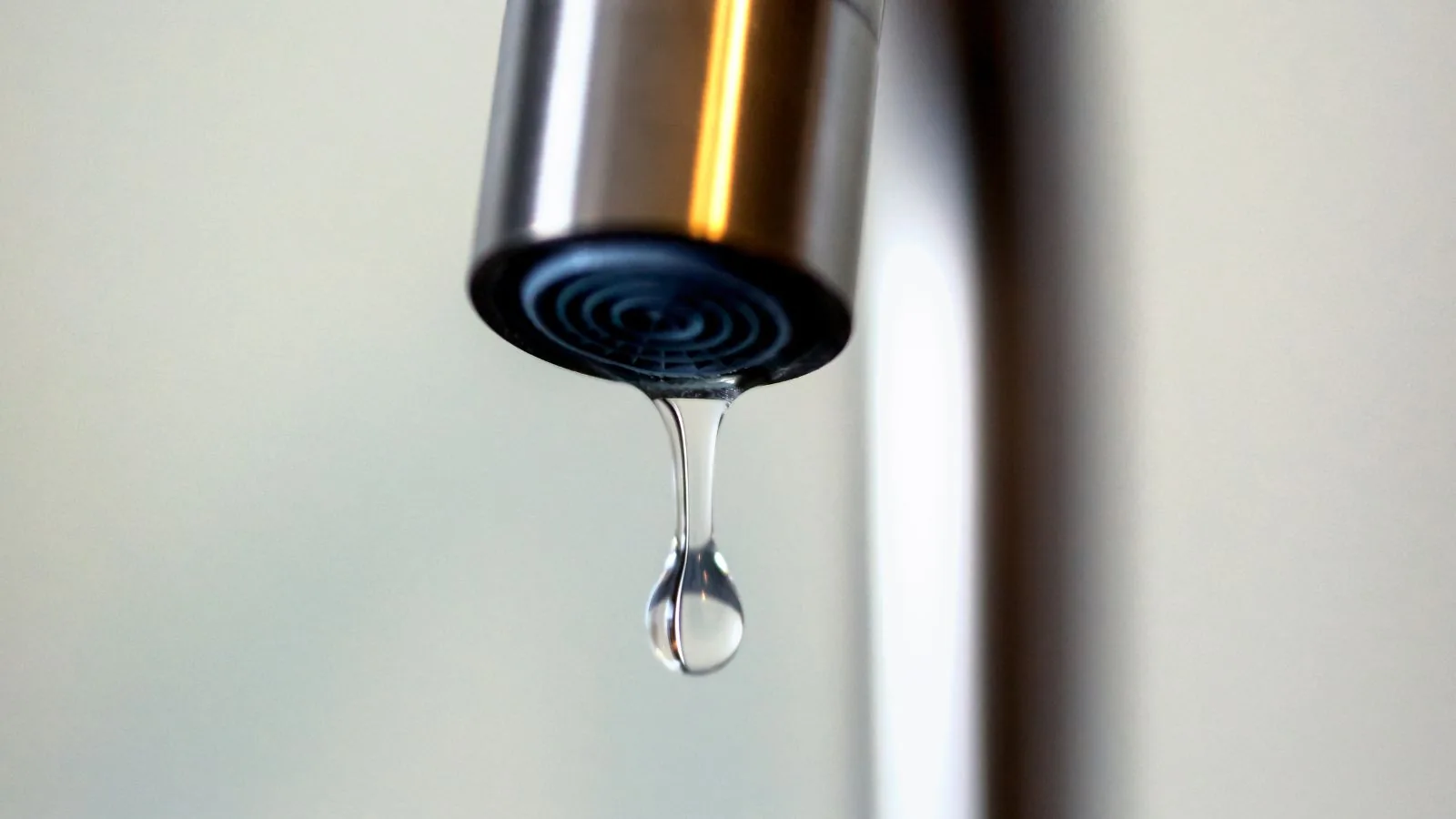
Why kitchens are hard to dry
A kitchen packs a lot of materials into a small space. Water gets under the cabinet toe kicks, behind the dishwasher, into the subfloor and sometimes into the ceiling of a room below. Particleboard cabinet bases swell and come apart when soaked, while solid wood and plywood hold up better.
Because the cabinets sit on top of the flooring, water under them is hard to reach. Crews often remove toe kicks, drill small drying holes or pull the base to let air in.
Kitchen losses follow ANSI/IICRC S500 water categories, and a dishwasher or washer drain leak is treated more carefully than a clean supply line.
Common kitchen sources
Knowing the source helps with the repair.
Dishwasher
A failed hose, door gasket or inlet valve leaks onto the floor, often when no one is home. See appliance leaks.
Sink supply and drain lines
A loose connection under the sink drips for weeks and soaks the cabinet floor.
Refrigerator ice-maker line
A small plastic line behind the fridge can crack and leak into the floor.
Faucet or garbage disposal
A failing seal drips into the cabinet and the damage builds slowly.
How a kitchen job runs
The order protects what can be saved.
Stop the water
Close the valve under the sink or the main, and unplug appliances.
Extract and move
Standing water is removed and the appliance, rugs and contents are moved out.
Open and dry
Toe kicks and wet cabinet bases are opened, and air movers and dehumidifiers go in.
Decide what stays
Cabinets, flooring and drywall are checked with meters and either dried or removed.
Water in the kitchen?
Close the valve, unplug the appliances and call the 24/7 line.
Flooring and cabinets after a leak
Vinyl and tile on a slab are usually the easiest floors to save. Laminate and engineered wood can swell, and solid hardwood often cups. See the hardwood page for how wood floors are handled.
Cabinets made of particleboard often cannot be saved if the base was soaked. Plywood cabinets may dry. The crew tells you what the meters read, and your insurer or a cabinet contractor judges replacement.
What to do before the crew arrives
A few steps limit the damage.
- Turn off the water valve and unplug the dishwasher and refrigerator if the cord is dry and reachable.
- Empty the cabinets under the sink and lift items off the floor.
- Take photos of the leak, the appliance and the damaged materials.
- Save the broken hose or fitting, because it helps the plumber and the insurer.
A slow leak under a sink may go unseen for weeks. A musty smell in the cabinet or a swollen cabinet base can be the first sign, and an old leak is treated differently by insurers than a sudden one.
What changes the cost of a kitchen job
Kitchens vary a lot.
| Cost factor | How it changes the job |
|---|---|
| Source and duration | A sudden leak costs less to clean than a leak that ran for weeks. |
| Cabinet materials | Particleboard bases are often replaced, and plywood may be saved. |
| Flooring type | Tile and vinyl are easier to save than laminate and wood. |
| Access to wet areas | Built-in cabinets and appliances add work to reach the subfloor. |
| Rebuild scope | New cabinets, counters and flooring are separate trades. |
Want your real number? Call the 24/7 line and tell the dispatcher where the water came from.
Kitchen leaks in Windsor Mill homes
Townhomes along Windsor Mill Road and Rolling Road have galley kitchens where a dishwasher leak soaks the floor and drips through the ceiling of the basement below. Older ranches in Milford Mill often have original sink lines with old shut-off valves that do not close fully.
The same line serves Woodlawn, Randallstown, Pikesville, Catonsville and Ellicott City.
Kitchen Water Damage Questions
Do you handle kitchen water emergencies at night or on weekends in Windsor Mill?
The 24/7 line is answered at any hour. A kitchen supply line or dishwasher leak is treated as urgent.
Can swollen cabinets be saved?
Plywood and solid wood often can if they are dried fast. Particleboard that swelled usually cannot.
Why does the dishwasher need to be moved?
Water pools under and behind it, and the subfloor there has to be dried.
Do you replace cabinets and countertops?
No. Cabinet and counter replacement is done by a kitchen contractor after the area is dry.
Is a slow leak under the sink covered by insurance?
Often not, because gradual leaks are treated as maintenance by many policies. Check your own policy.