
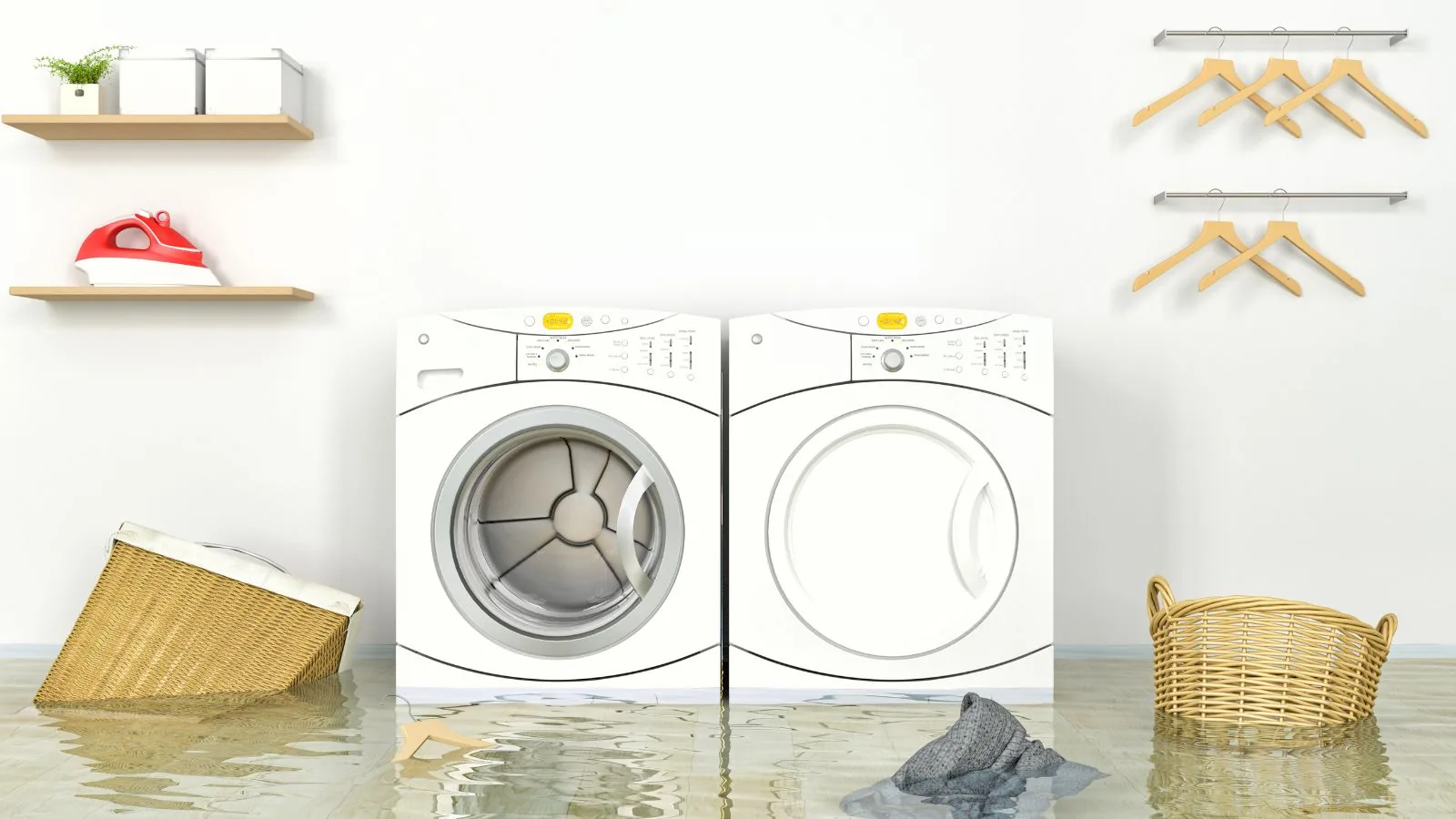
The usual suspects in an appliance leak emergency
Washing machines are the biggest source. A rubber supply hose can burst under pressure and run until someone notices. Dishwasher hoses and door seals fail, and so do refrigerator ice-maker lines and water dispensers.
Most of these leaks run on clean water, which is the easier case. The trouble is the time. A leak that runs while you are at work can spread through a floor and into the ceiling below.
Under ANSI/IICRC S500, water from a washer drain hose is not the same category as water from a supply hose, and the cleanup steps differ.
Where each appliance tends to leak
A quick check can find the cause.
Washing machine
Inlet hoses, the drain hose and the drain pan. Rubber hoses older than five years are at higher risk.
Dishwasher
The door gasket, the inlet valve and the drain connection under the sink.
Refrigerator
The small ice-maker line behind the unit, or a clogged defrost drain that overflows.
Dehumidifier or humidifier
Overflowing tanks and cracked reservoirs spill onto floors.
How an appliance leak is handled
Stop it, dry it, then fix the cause.
Stop the water
Close the supply valve to the appliance, and unplug it if safe.
Remove the water
Standing water is extracted and the appliance is moved so the floor can be reached.
Check what is wet
Moisture meters read floors, walls and any ceiling below.
Dry and clean
Air movers and dehumidifiers dry the area, and wet materials that cannot be saved are removed.
Appliance leaking?
Shut the valve and call the 24/7 line.
Insurance and appliance leaks
A sudden appliance failure is often the type of loss a homeowners policy covers, but many policies exclude the appliance itself and cover only the water damage it caused. Long, slow leaks are usually treated as maintenance by the Maryland Insurance Administration's guidance on policy exclusions.
Keep the broken part. Insurers and manufacturers sometimes ask for it, and a photo of the failed hose with the date helps. If you rent, a landlord's policy may handle the building while yours handles your contents.
Prevent the next one
A few habits cut the risk.
- Replace rubber washer hoses with braided steel hoses, and check them each year.
- Close the washer valves when you leave on a trip.
- Pull the fridge out once a year and look at the ice-maker line.
- Consider a leak sensor under the washer, dishwasher and water heater.
A leaking water heater is a related problem covered on the water heater page.
What changes the cost of appliance leak cleanup
Most appliance leaks are mid-size jobs.
| Cost factor | How it changes the job |
|---|---|
| Duration of the leak | Hours versus days changes how far the water reached. |
| Floors below | Water that traveled into a ceiling below adds a second room. |
| Flooring type | Carpet, laminate and hardwood each respond differently. |
| Cabinet or wall involvement | Water behind cabinets or walls needs cavity drying. |
| Appliance repair | The appliance repair or replacement is separate. |
Want your real number? Call the 24/7 line and say which appliance and how long it ran.
Appliance leak calls near Windsor Mill
Laundry closets in apartments along Rolling Road and second-floor laundry rooms in townhomes produce a lot of these calls. Water from an upstairs washer reaches the ceiling below within hours.
The same line serves Hebbville, Woodlawn, Randallstown, Pikesville and Catonsville. For leaks inside a cabinet run, see the kitchen page.
Appliance Leak Water Damage Questions
Do you handle appliance leak emergencies at night or on weekends in Windsor Mill?
The 24/7 line is answered at all hours, and appliance leaks often show up in the evening.
Is the water from a washing machine clean?
Supply water is clean at first. Water from the drain hose is gray water and is treated more carefully.
Should I move the appliance myself?
Not if the floor is wet and the cord is plugged in. Unplug first from a dry spot, and let the crew move it.
Will insurance pay for the appliance too?
Often only the water damage, not the appliance. Read your policy.
How do I tell which hose failed?
Check the supply hoses and the drain hose for bulges, cracks or wet fittings. The plumber or technician can confirm.